Featured collection
-
Titre du produit
Prix habituel $648.65Prix habituelPrix unitaire / par -
Titre du produit
Prix habituel $648.65Prix habituelPrix unitaire / par -
Titre du produit
Prix habituel $648.65Prix habituelPrix unitaire / par -
Titre du produit
Prix habituel $648.65Prix habituelPrix unitaire / par


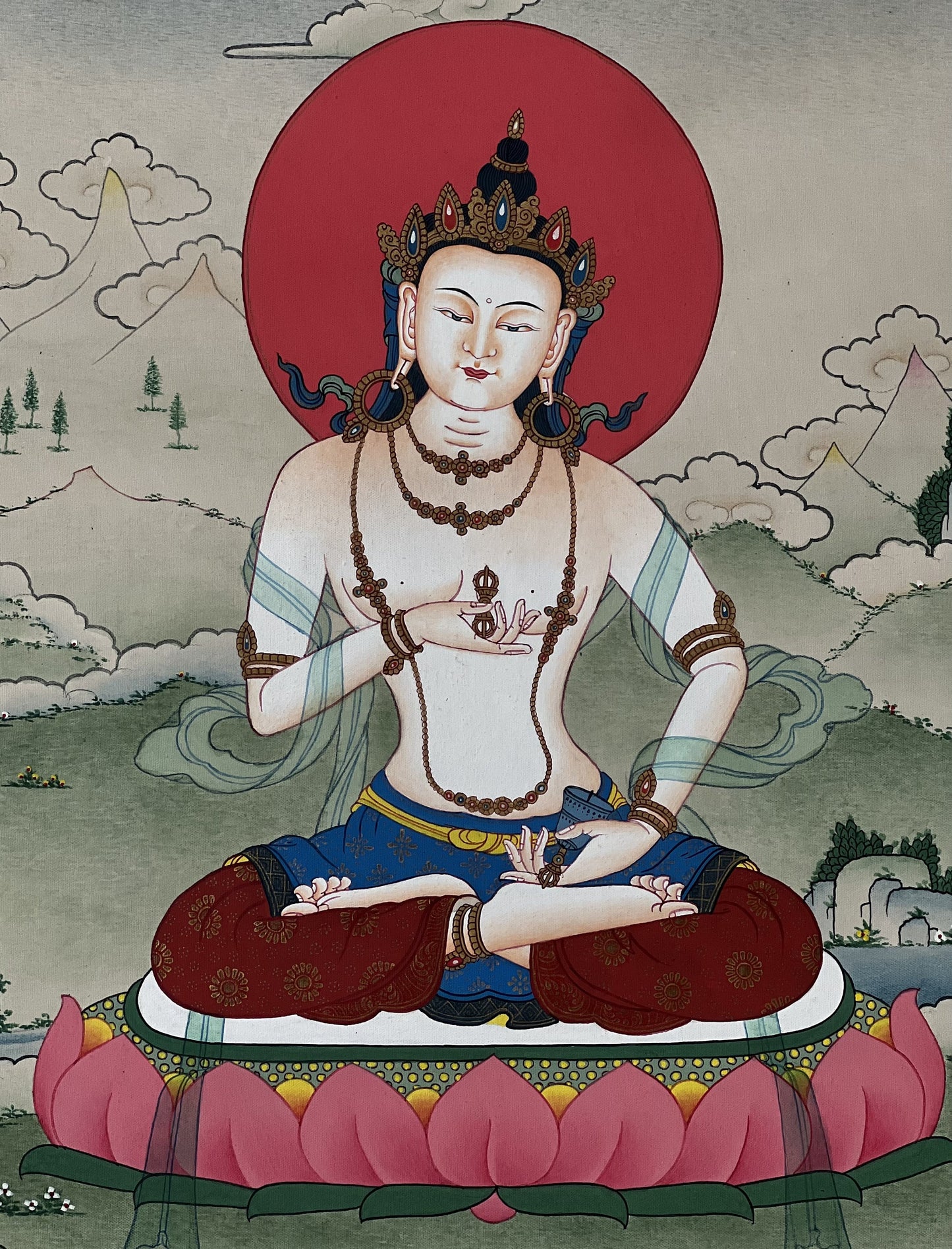
Vajrasattva Thangka – Lama Blessed Karma Gadri Style | Hand-Painted Tibetan Buddhist Art
Vajrasattva Thangka – Lama Blessed Karma Gadri Style | Hand-Painted Tibetan Buddhist Art
Impossible de charger la disponibilité du service de retrait
| 17x23 in
SEO Tags (13 tags, comma-separated)
vajrasattva thangka, karma gadri art, tibetan painting, dorje sempa art, buddhist purification, lama blessed art, himalayan art, meditation decor, nepal thangka, tantric buddhism art, sacred wall art, guru yoga art, hand painted art
Full Description
This is an original hand-painted Vajrasattva Thangka created in the refined Karma Gadri style and blessed by a Lama. It is a master-quality Tibetan artwork painted using traditional Himalayan methods.
The Karma Gadri tradition is known for:
Fine and precise linework
Spacious natural backgrounds
Balanced composition
Rich yet harmonious colors
This style began during the time of the 8th Karmapa, Mikyo Dorje (1507–1554), a renowned meditation master who encouraged artistic innovation within Tibetan sacred art.
About Vajrasattva
Vajrasattva, also known as Dorje Sempa in Tibetan, means “Diamond Being” or “Thunderbolt Being.” The vajra represents indestructible truth and awakened awareness.
In Mahayana and Vajrayana Buddhism, Vajrasattva symbolizes:
Purification of negative karma
Restoration of broken vows
Inner clarity
Spiritual renewal
He is central to tantric practice and is mentioned in important scriptures such as the Mahavairocana Sutra and the Vajrasekhara Sutra.
Role in Different Traditions
Tibetan Buddhism
Vajrasattva practice is foundational in all four Tibetan schools. It is especially important in Ngondro (preliminary practices) for purification. Practitioners recite his mantra to cleanse obscurations and prepare the mind for higher tantric meditation.
Newar Buddhism
In the Kathmandu Valley, Vajrasattva represents the ideal Guru. He is invoked in daily rituals and mandala practices by Vajracharya priests.
Shingon Buddhism
In Japanese esoteric Buddhism, Vajrasattva is regarded as the second patriarch, connected to the transmission of tantric teachings.
Iconography
Vajrasattva is typically shown:
Holding a vajra in his right hand (symbol of compassion and method)
Holding a bell (ghanta) in his left hand (symbol of wisdom)
Seated in meditation posture
Radiating calm, purity, and clarity
His white form symbolizes purification and luminous awareness.
Spiritual Significance
This Thangka is ideal for:
Purification practice
Guru yoga meditation
Tantric practice
Sacred altar space
Collectors of authentic Himalayan art
It represents cleansing, renewal, and the path toward enlightened awareness.
Artwork Details
Inner Painting Size: 17 × 23 inches (44 × 58 cm)
Size with Silk Brocade: 33 × 43 inches (83 × 119 cm)
Surface Material: Handmade cotton canvas
Colors: Natural stone pigments, gold, and water-based colors
Style: Karma Gadri
Origin: Hand-painted in Nepal
Blessing: Lama blessed
This Vajrasattva Thangka is more than decorative art. It is a sacred symbol of purification and spiritual clarity, created with devotion and rooted in authentic Himalayan tradition.
Partager